BEGIN:VCALENDAR
VERSION:2.0
PRODID:-//jEvents 2.0 for Joomla//EN
CALSCALE:GREGORIAN
METHOD:PUBLISH
BEGIN:VTIMEZONE
TZID:Europe/Paris
BEGIN:STANDARD
DTSTART:20251026T020000
RDATE:20260329T030000
TZOFFSETFROM:+0200
TZOFFSETTO:+0100
TZNAME:Europe/Paris CET
END:STANDARD
BEGIN:STANDARD
DTSTART:20261025T020000
RDATE:20270328T030000
TZOFFSETFROM:+0200
TZOFFSETTO:+0100
TZNAME:Europe/Paris CET
END:STANDARD
BEGIN:STANDARD
DTSTART:20271031T020000
RDATE:20280326T030000
TZOFFSETFROM:+0200
TZOFFSETTO:+0100
TZNAME:Europe/Paris CET
END:STANDARD
BEGIN:DAYLIGHT
DTSTART:20250423T090000
RDATE:20251026T020000
TZOFFSETFROM:+0100
TZOFFSETTO:+0200
TZNAME:Europe/Paris CEST
END:DAYLIGHT
BEGIN:DAYLIGHT
DTSTART:20260329T030000
RDATE:20261025T020000
TZOFFSETFROM:+0100
TZOFFSETTO:+0200
TZNAME:Europe/Paris CEST
END:DAYLIGHT
BEGIN:DAYLIGHT
DTSTART:20270328T030000
RDATE:20271031T020000
TZOFFSETFROM:+0100
TZOFFSETTO:+0200
TZNAME:Europe/Paris CEST
END:DAYLIGHT
END:VTIMEZONE
BEGIN:VEVENT
UID:d497119f72c84478f370179e9f2314e7
CATEGORIES:Journées d’étude, Séminaire du CREM
CREATED:20260118T143744
SUMMARY:World Amplification International Study Day
LOCATION:MSH Mondes (bât. Weber)\, salle 2 (RDC) - 200 avenue de la République\, Nan
terre\, \, 92000\,
DESCRIPTION:\n \nOrganized by Pierre Prouteau (LAMC & EASt/ULB, CREM, CASE)\nDoes t
he sound of the world tend to become always more amplified? Why does this f
eeling stays on the mind like an earworm, sometimes with delight, often wit
h a negative value attached to it – the nuisance of noise. How has this pot
entially universal tendency to enhance amplification been reinvigorated by
electroacoustic? The objective of this study day is to address electroacous
tic amplification in its physiological, acoustic, aesthetic, philosophical,
technical, moral dimensions—is the pleasure of some, the noise of others,
and how is the occupied “volume” negotiated? And its afferent political dim
ension. The idea is to examine the definitions of sound intensity, its effe
cts on audience perception, and how electroacoustic amplification has impac
ted already-existing repertoires, and contributed to create new ones. Can s
ound systems be a weapon in the media arena? As a weapon of the weak or an
instrument of domination?\nProgram9h30-10h Coffee\nI. Musicians and amplifi
cation10h-10h30 Abderraouf Ouertani (member CUNTIC, Univ. of Tunis) What am
plification requires: The Impact of Amplification on Oud Practices (and its
study)\n10h30-11h Sarah Benhaim (Lecturer Univ. of Lorraine) Extreme liste
ning: sounds and amplification in noise music\n11h-11h30 Coffee\nII. Theori
es and measures of amplification (1)11h30-12h Mukul Menon (predoc, Univ. Tü
bingen) Modulating Religiosity: Qualified Amplification of Sounds, Ideas, a
nd Practices \n12h-12h30 Helma Korzybska (S2HEP, Univ. Lyon 1, member LESC/
CNRS, Univ. Paris Nanterre) Redefining “noise”. Amplifications, modulations
and redefinitions of auditory perception through cochlear implants\n12h30-
14h Lunch Break\nII. Theories and measures of amplification (2)14h-14h30 Ca
rola Lorea (Professor Univ. of Tübingen) On mantras, picnic parties and car
horns: towards a South Asian sonic theory of amplification as auspiciousne
ss\n \nConclusive remarks\n14h30-15h Pierre Prouteau (LAMC, EASt/ULB, CREM,
CASE) What is an "amplified society" ?\n15h-16h Collective discussion and
end of study day\n \nAbstractsAbderraouf Ouertani (member CUNTIC, Univ. of
Tunis) What amplification requires: The impact of amplification on oud prac
tices (and its study)\nThis presentation will describe the impact of the wi
despread use of electric amplification in the case of the oud, between cons
traints (sound degradation, feedback) and advantages (new sounds, going bey
ond the strict framework of chamber music). It will also be an opportunity
to discuss the place of socio-technical phenomena related to electric ampli
fication in music studies and to problematise some key concepts in ethnomus
icology such as ‘instrument’, “music” and ‘musician’.\nSarah Benhaim (Lectu
rer Univ. of Lorraine) Extreme listening: sounds and amplification in noise
music\nConsidering loud sound objects in the field of music invites us to
take an interest in the technical means and technologies used to amplify mu
sical productions, but also in musical genres that place particular importa
nce on sound volume in their creative process and listening modalities. Thi
s is the case with noise music, an experimental music that emerged in the e
arly 1980s, which is unique in that it is characterised by noise-based mate
rial and sound diffusion conditions that are often considered extreme. I wi
ll examine how noise artists and listeners perceive noise and high-volume a
mplification aesthetically and sensorially, based on interviews and recordi
ngs from a field study conducted in Paris. After a brief review of the cent
rality of noise in noise music, I will explain how amplification constitute
s a noisy mediation from the point of view of instrumental performance, bef
ore showing how it plays a major role in live listening by promoting an imm
ersive and ecstatic listening experience.\nMukul Menon (predoc, Univ. Tübin
gen) Modulating Religiosity: Qualified Amplification of Sounds, Ideas, and
Practices\nSound in the context of public, communal, and private piety is l
inked to mediation with the more-than-human and the inscription of identity
, social relations, and associations with the past. Amplification as a tool
and a method of augmenting such processes is especially evident in religio
us cultures that are based on what has been termed ‘acoustic piety’, that i
s, religiosity significantly produced, interpreted, and perceived through s
ound and in sonic terms. What do differences in sonic and cultural amplific
ation of religious practices in a hierarchical and stratified social enviro
nment indicate about underlying social phenomena? To explore this idea, thi
s paper takes as a case study the popular practice of recitations of the 16
th-century text, Addhyātma Rāmāyaṇam Kiḷippāṭṭ, a regional vernacular retel
ling of the religious epic Rāmāyaṇa in Kerala, South India. Using ethnograp
hic and archival data, it looks at how, through the amplification of recita
tional practices and ancillary activities- including onsite live and playba
ck performances, congregational sonic acts, public sermons, and political s
peeches in urban and rural contexts- particular communities, socialities, a
nd spaces are delineated. Modulations in how ideas and sounds are expanded
indicate particularities of cultural transformations and continuities. whic
h are expressed, shared, and felt, but also creatively deployed by social a
gents.\nHelma Korzybska (S2HEP, Univ. Lyon 1, member LESC/CNRS, Univ. Paris
Nanterre) Redefining “noise”. Amplifications, modulations and redefinition
s of auditory perception through cochlear implants\nIntroducing neurotechno
logies into the bodies and perception of people who have lost the ability t
o hear raises numerous technical, cultural and ethical questions (Mills 201
2, Friedner and Helmreich 2012, Lloyd & Bonventre 2020, Bonventre et al
. 2023, Kecman et al. 2026), nuancing widespread notions of human augmentat
ion. The learning and rehabilitation process following the surgical implant
ation is long and strenuous, leaving people with sounding worlds they often
find difficult to interpret and to incorporate. Not only do individuals ha
ve to deal with day-to-day technical issues and sensory fluctuations, but t
hey also must learn to manage the cultural gap with the newfound perception
.\nUsing cochlear implants requires different types of adjustments and nego
tiations, of sensory thresholds, somatic modes of attention, as well as exp
ectations… If “augmenting” perception doesn’t usually translate in a melior
ative sense, some kind of enhancement does operate here. What kinds of ampl
ifications or intensifications are produced or enabled through these stimul
ation devices? How are perception and experience amplified in this context?
\nThe technological design and implantation and rehabilitation protocols le
ad to very specific ways of heightening sensations and modes of attention.
This communication proposes to offer insights into the complexity of equipp
ing perception with technological devices, by focusing on the semantic, sen
sory, and affective redefinitions of “noise”, as revealed through the elect
rode calibration process and negotiations between patients and speech thera
pists/audiologists observed in a cochlear implantation service in France.\n
Dr. Carola Lorea (Professor Univ. of Tübingen) On mantras, picnic parties a
nd car horns: towards a South Asian sonic theory of amplification as auspic
iousness\nBased on extensive ethnographic research on mantras and sacred so
und practices in India, this paper develops a preliminary theory of amplifi
cation as auspiciousness. Drawing on sonic ethnography, I approach amplific
ation not primarily as a technical operation, but as a culturally and ritua
lly charged modality of sharing auspiciousness in space. I first demonstrat
e how amplified sound is widely associated with safety, joy, the assertion
of presence, life energy, and positive force. Through everyday and festive
soundscapes—such as picnic-season loudspeaker cultures and the affective se
nsorium of vehicular honking—I show how loudness and sonic expansion are so
cially experienced as protective, enlivening, and affirming.\nThe paper the
n moves beyond strictly audible sound to explore forms of non-electroacoust
ic amplification of unheard auspicious sounds. Focusing in particular on sp
inning and other kinetic practices, I examine how motion itself amplifies m
antras—understood as sacred, efficacious formulas—by engaging agentive elem
ents such as wind, fire, electricity, and the human voice. Here, amplificat
ion is not only a matter of volume, but of circulation, repetition, and sca
ttering into space, underscoring the inseparability of sound, movement, spa
ce, and felt vibration. By bringing together loudness, motion, and mantra p
ractice, this paper traces the contours of a broader South Asian sonic ideo
logy in which amplification emerges as a central mode of producing auspicio
usness and of making place.\n
X-ALT-DESC;FMTTYPE=text/html: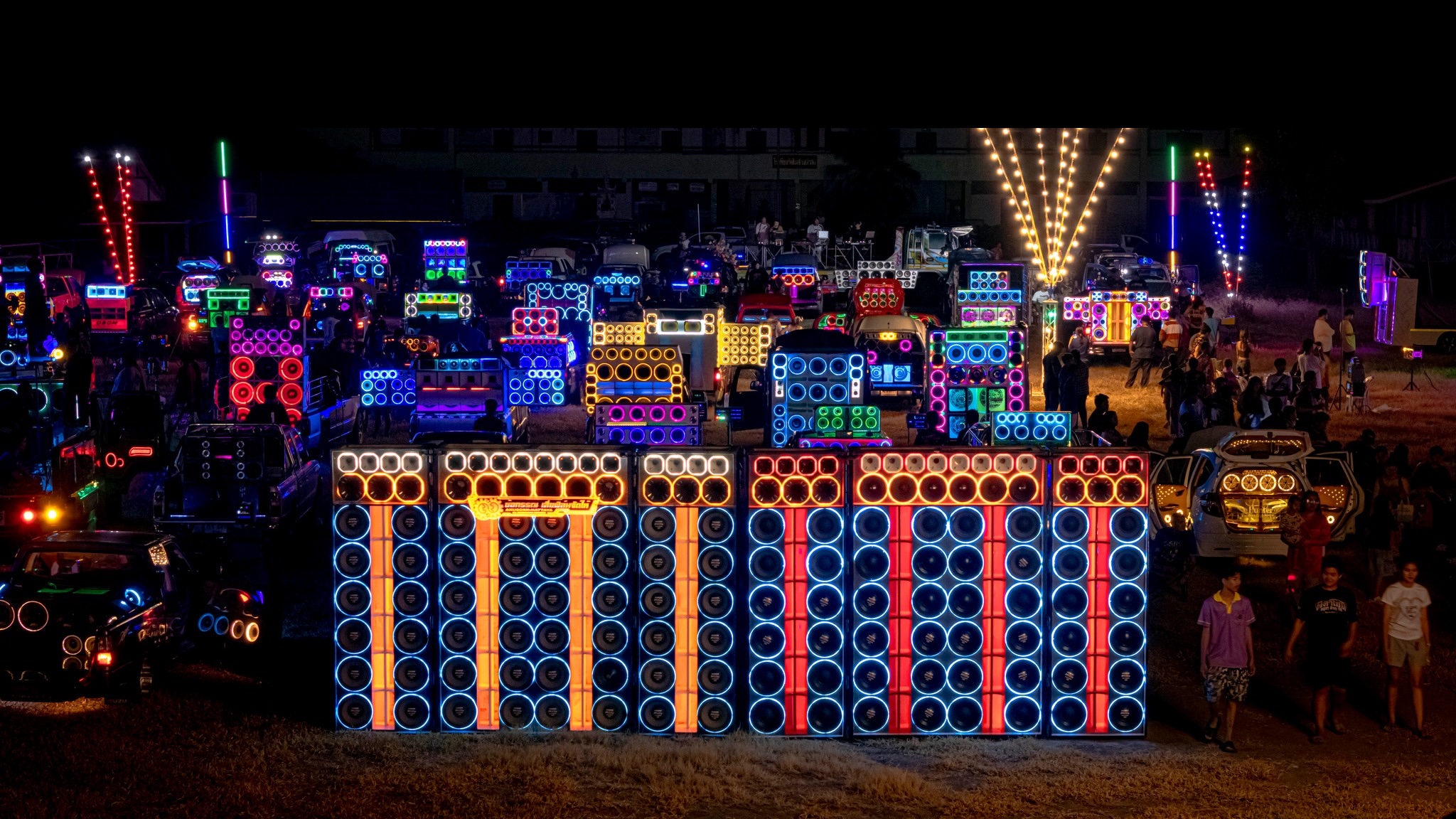
Organized
by Pierre Prouteau (LAMC & EASt/ULB, CREM, CASE)
Does the sound of the world tend to become always more amplifie
d? Why does this feeling stays on the mind like an earworm, sometimes with
delight, often with a negative value attached to it – the nuisance of noise
. How has this potentially universal tendency to enhance amplification been
reinvigorated by electroacoustic? The objective of this study day is to ad
dress electroacoustic amplification in its physiological, acoustic, aesthet
ic, philosophical, technical, moral dimensions—is the pleasure of some, the
noise of others, and how is the occupied “volume” negotiated? And its affe
rent political dimension. The idea is to examine the definitions of sound i
ntensity, its effects on audience perception, and how electroacoustic ampli
fication has impacted already-existing repertoires, and contributed to crea
te new ones. Can sound systems be a weapon in the media arena? As a weapon
of the weak or an instrument of domination?
Program
9h
30-10h Coffee
I. Musicians and amplification
10h-10h30 Abderr
aouf Ouertani (member CUNTIC, Univ. of Tunis) What amplification requires: The Impact of Amplification on Oud P
ractices (and its study)
10h30-11h Sarah Benhaim (Lecturer Univ. of L
orraine) Extreme listening: sounds and amplification in noise music
1
1h-11h30 Coffee
II. Theories and measures of amplification (1)<
/h3>
11h30-12h Mukul Menon (predoc, Univ. Tübingen) Modulating Relig
iosity: Qualified Amplification of Sounds, Ideas, and Practices
12h-12h30 Helma Korzybska (S2
HEP, Univ. Lyon 1, member LESC/CNRS, Univ. Paris Nanterre) Redefining “nois
e”. Amplifications, modulations and redefinitions of auditory perception th
rough cochlear implants
12h30-14h Lunch Break
II. Theor
ies and measures of amplification (2)
14h-14h30 Carola Lorea (P
rofessor Univ. of Tübingen) On mantras, picnic parties and car horns: towar
ds a South Asian sonic theory of amplification as auspiciousness
&nbs
p;
Conclusive remarks
14h30
-15h Pierre Prouteau (LAMC, EASt/ULB, CREM, CASE) What is an "amplified soc
iety" ?
15h-16h Collective discussion and end of study day
Abstracts
Abderraouf Ouertani (member CUNTIC, Univ. of Tunis) What amplification requires: T
he impact of amplification on oud practices (and its study)
This presentation will describe the impact of the widespread use of electri
c amplification in the case of the oud, between constraints (sound degradat
ion, feedback) and advantages (new sounds, going beyond the strict framewor
k of chamber music). It will also be an opportunity to discuss the place of
socio-technical phenomena related to electric amplification in music studi
es and to problematise some key concepts in ethnomusicology such as ‘instru
ment’, “music” and ‘musician’.
Sarah Benhaim (Lecturer Univ.
of Lorraine) Extreme listening: sounds and amplification in noise music
Considering loud sound objects in the field of music invites us
to take an interest in the technical means and technologies used to amplif
y musical productions, but also in musical genres that place particular imp
ortance on sound volume in their creative process and listening modalities.
This is the case with noise music, an experimental music that emerged in t
he early 1980s, which is unique in that it is characterised by noise-based
material and sound diffusion conditions that are often considered extreme.
I will examine how noise artists and listeners perceive noise and high-volu
me amplification aesthetically and sensorially, based on interviews and rec
ordings from a field study conducted in Paris. After a brief review of the
centrality of noise in noise music, I will explain how amplification consti
tutes a noisy mediation from the point of view of instrumental performance,
before showing how it plays a major role in live listening by promoting an
immersive and ecstatic listening experience.
Mukul Menon (pr
edoc, Univ. Tübingen) Modulating Religiosity: Qualified Amplification of So
unds, Ideas, and Practices
Sound in the context of public, c
ommunal, and private piety is linked to mediation with the more-than-human
and the inscription of identity, social relations, and associations with th
e past. Amplification as a tool and a method of augmenting such processes i
s especially evident in religious cultures that are based on what has been
termed ‘acoustic piety’, that is, religiosity significantly produced, inter
preted, and perceived through sound and in sonic terms. What do differences
in sonic and cultural amplification of religious practices in a hierarchic
al and stratified social environment indicate about underlying social pheno
mena? To explore this idea, this paper takes as a case study the popular pr
actice of recitations of the 16th-century text, Addhyātma Rāmā
yaṇam Kiḷippāṭṭ, a regional vernacular retelling of the relig
ious epic Rāmāyaṇa in Kerala, South India. Using ethnographic and
archival data, it looks at how, through the amplification of recitational p
ractices and ancillary activities- including onsite live and playback perfo
rmances, congregational sonic acts, public sermons, and political speeches
in urban and rural contexts- particular communities, socialities, and space
s are delineated. Modulations in how ideas and sounds are expanded indicate
particularities of cultural transformations and continuities. which are ex
pressed, shared, and felt, but also creatively deployed by social agents.
Helma Korzybska (S2HEP, Univ. Lyon 1, member LESC/CNRS, Univ.
Paris Nanterre) Redefining “noise”. Amplifications, modulations and redefin
itions of auditory perception through cochlear implants
Intr
oducing neurotechnologies into the bodies and perception of people who have
lost the ability to hear raises numerous technical, cultural and ethical q
uestions (Mills 2012, Friedner and Helmreich 2012, Lloyd & Bonventre 20
20, Bonventre et al. 2023, Kecman et al. 2026), nuancing widespread notions
of human augmentation. The learning and rehabilitation process following t
he surgical implantation is long and strenuous, leaving people with soundin
g worlds they often find difficult to interpret and to incorporate. Not onl
y do individuals have to deal with day-to-day technical issues and sensory
fluctuations, but they also must learn to manage the cultural gap with the
newfound perception.
Using cochlear implants requires different types
of adjustments and negotiations, of sensory thresholds, somatic modes of a
ttention, as well as expectations… If “augmenting” perception doesn’t usual
ly translate in a meliorative sense, some kind of enhancement does operate
here. What kinds of amplifications or intensifications are produced or enab
led through these stimulation devices? How are perception and experience am
plified in this context?
The technological design and implantation an
d rehabilitation protocols lead to very specific ways of heightening sensat
ions and modes of attention. This communication proposes to offer insights
into the complexity of equipping perception with technological devices, by
focusing on the semantic, sensory, and affective redefinitions of “noise”,
as revealed through the electrode calibration process and negotiations betw
een patients and speech therapists/audiologists observed in a cochlear impl
antation service in France.
Dr. Carola Lor
ea (Professor Univ. of Tübingen) On mantras, picnic parties and car horns:
towards a South Asian sonic theory of amplification as auspiciousness
Based on extensive ethnographic researc
h on mantras and sacred sound practices in India, this paper develops a pre
liminary theory of amplification as auspiciousness. Drawing on sonic ethnog
raphy, I approach amplification not primarily as a technical operation, but
as a culturally and ritually charged modality of sharing auspiciousness in
space. I first demonstrate how amplified sound is widely associated with s
afety, joy, the assertion of presence, life energy, and positive force. Thr
ough everyday and festive soundscapes—such as picnic-season loudspeaker cul
tures and the affective sensorium of vehicular honking—I show how loudness
and sonic expansion are socially experienced as protective, enlivening, and
affirming.
The paper then moves beyond str
ictly audible sound to explore forms of non-electroacoustic amplification o
f unheard auspicious sounds. Focusing in particular on spinning and other k
inetic practices, I examine how motion itself amplifies mantras—understood
as sacred, efficacious formulas—by engaging agentive elements such as wind,
fire, electricity, and the human voice. Here, amplification is not only a
matter of volume, but of circulation, repetition, and scattering into space
, underscoring the inseparability of sound, movement, space, and felt vibra
tion. By bringing together loudness, motion, and mantra practice, this pape
r traces the contours of a broader South Asian sonic ideology in which ampl
ification emerges as a central mode of producing auspiciousness and of maki
ng place.
DTSTAMP:20260531T121322
DTSTART;TZID=Europe/Paris:20260424T090000
DTEND;TZID=Europe/Paris:20260424T180000
SEQUENCE:0
TRANSP:OPAQUE
END:VEVENT
END:VCALENDAR