Cet exposé comp
arera le marquage de la distance temporelle, de la pertinence et de la conj
ecture dans deux langues amazoniennes de Bolivie (le chácobo et l’araona).
La littérature linguistique sur la distance temporelle s’est attachée à élu
cider les catégories sémantiques à l’œuvre (« graded tense&nb
sp;», « metric tense », « temporal remoteness »), la façon dont elles combinent des traits de l’aspect, du temps
et des adverbes (augmentant l’éventail des catégories typologiques connues
, Cable 2013 ; Mucha 2016 ; Tallman et Stout 2016, 2018 ; Ta
llman 2018), ainsi que les propriétés concernant le caractère affirmé ou pr
ésupposé de la distance temporelle et son type d’ancrage (topic vs. utt
erance time). Cependant, les aspects pragmatiques et plus culturels de
la signification des marqueurs de distance temporelle ont été laissés de c
ôté dans ces analyses, tels que la façon dont les notions internes de récen
ce et de distance temporelles sont négociées dans le discours ou leurs asym
étries quant à l’encodage d’une pertinence persistante. En outre, ces analy
ses ne fournissent aucune explication de l'association synchronique et diac
hronique entre les morphèmes conjecturaux et les marqueurs d'éloignement te
mporel (saillants en chácobo et en araona). Dans une tentative de combler c
ette lacune, cet exposé explorera la possibilité d'aborder ces catégories d
u point de vue de la notion d’indexicalité créative de Silverstein (1976).<
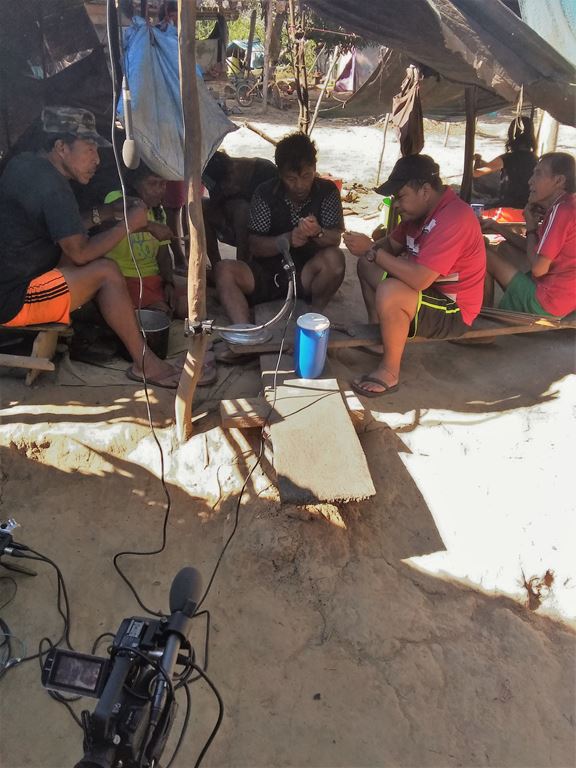
/p> Cliché: Session d'enregistrement chez les Araona, ri
vière Manuripi, Bolivie / © Adam Tallman. L'intervention se
ra réalisée en anglais. Temporal distance,
relevance, and conjecture in Chácobo (Pano) and Araona (Takana) This talk will compare the marking of temporal distance, relevance and
conjecture in two Amazonian languages of Bolivia (Chácobo and Araona). The
linguistic literature on temporal distance has concentrated on its semantic
categories ('graded tense', 'metric tense', 'temporal remoteness'), how th
ey mix features from the aspect, tense and temporal domains (enlarging the
known typological categories Cable 2013; Mucha 2016; Tallman & Stout 20
16, 2018; Tallman 2018), as well as on properties related with whether they
assert or presuppose temporal information and whether temporal distance is
measured with respect to topic (or temporal reference) time or utterance t
ime. Pragmatic and more culturally grounded aspects of the meaning of tempo
ral distance markers have been left out of these analyses, how mind-interna
l notions of temporal recency and distance are negotiated in discourse and
asymetries in the extent to which these morphemes encode lingering relevanc
e. Furthermore, these analyses provide no explanation for the synchronic an
d diachronic association between conjectural morphemes and markers of tempo
ral remoteness (salient in both Chácobo and Araona). In an attempt to fill
this gap, this talk will explore the possibility of approaching these categ
ories from the perspective of Silverstein's notion of creative indexicality
(Silverstein 1976). References citées C
able, S. (2013). Beyond the past, present, and future: towards the semantic
s of 'graded tense' in Gĩkũyũ. Natural Language Semantics, 21, 219
-276. Michael, L. D. (2008). Nanti evidential practice: Language,
knowledge, and social action in an Amazonian society. PhD Thesis, Uni
versity of Texas at Austin. Mucha, A. (2015). Temporal Interpreta
tion and Cross-Linguistic Variation: A formal semantic analysis of temporal
and aspectual reference in Hausa Medumba. Potsdam: PhD thesis, Univer
sity of Potsdam. Silverstein, M. (1976). Shifters, Linguistic Categor
ies and Cultural Description. In K. H. Basso, & H. A. Selby (Eds.), Meaning in Anthropology. Albuquerque: University of New Mexico Press.
Tallman, A. J. (2018). A Grammar of Chácobo, a southern Pano lan
guage of the northern Bolivian Amazon. University of Texas at Austin,
PhD Thesis. Tallman, A. J., & Stout, T. (2016). The perfect in Ch
ácobo in cross-linguistic perspective. In T. Bui, & R.-R. Ivan (Eds.),
SULA 9: Proceedings of the Ninth Conference on the Semantics of Under-R
epresented Languages in the Americas. University of California, Santa
Cruz. Tallman, A. J., & Stout, T. (2018). Tense and temporal remo
teness in Chácobo (Pano). In M. Keough, N. Weber, A. Anghelescu, S. Chen, E
. Guntly, K. Johnson, . . . O. Tkachman (Ed.), Proceedings of the Works
hop on the Structure and Constituency in the Languages of the Americas 21 (pp. 210-224). Montreal: University of British Columbia Working Papers
in Linguistics 46. Cet exposé comparera le marquage de la distance temporelle, de l
a pertinence et de la conjecture dans deux langues amazoniennes de Bolivie
(le chácobo et l’araona). La littérature linguistique sur la distance tempo
relle s’est attachée à élucider les catégories sémantiques à l’œuvre («&nbs
p;graded tense », « metric tense », «
;temporal remoteness »), la façon dont elles combinent des tr
aits de l’aspect, du temps et des adverbes (augmentant l’éventail des catég
ories typologiques connues, Cable 2013 ; Mucha 2016 ; Tallman et
Stout 2016, 2018 ; Tallman 2018), ainsi que les propriétés concernant
le caractère affirmé ou présupposé de la distance temporelle et son type d’
ancrage (topic vs. utterance time). Cependant, les aspects pragmat
iques et plus culturels de la signification des marqueurs de distance tempo
relle ont été laissés de côté dans ces analyses, tels que la façon dont les
notions internes de récence et de distance temporelles sont négociées dans
le discours ou leurs asymétries quant à l’encodage d’une pertinence persis
tante. En outre, ces analyses ne fournissent aucune explication de l'associ
ation synchronique et diachronique entre les morphèmes conjecturaux et les
marqueurs d'éloignement temporel (saillants en chácobo et en araona). Dans
une tentative de combler cette lacune, cet exposé explorera la possibilité
d'aborder ces catégories du point de vue de la notion d’indexicalité créati
ve de Silverstein (1976). Cliché: Session d'enregist
rement chez les Araona, rivière Manuripi, Bolivie / © Adam Tallman. &
nbsp;L'intervention sera réalisée en anglais. <
strong>Temporal distance, relevance, and conjecture in Chácobo (Pano) and A
raona (Takana) This talk will compare the marking of tempora
l distance, relevance and conjecture in two Amazonian languages of Bolivia
(Chácobo and Araona). The linguistic literature on temporal distance has co
ncentrated on its semantic categories ('graded tense', 'metric tense', 'tem
poral remoteness'), how they mix features from the aspect, tense and tempor
al domains (enlarging the known typological categories Cable 2013; Mucha 20
16; Tallman & Stout 2016, 2018; Tallman 2018), as well as on properties
related with whether they assert or presuppose temporal information and wh
ether temporal distance is measured with respect to topic (or temporal refe
rence) time or utterance time. Pragmatic and more culturally grounded aspec
ts of the meaning of temporal distance markers have been left out of these
analyses, how mind-internal notions of temporal recency and distance are ne
gotiated in discourse and asymetries in the extent to which these morphemes
encode lingering relevance. Furthermore, these analyses provide no explana
tion for the synchronic and diachronic association between conjectural morp
hemes and markers of temporal remoteness (salient in both Chácobo and Araon
a). In an attempt to fill this gap, this talk will explore the possibility
of approaching these categories from the perspective of Silverstein's notio
n of creative indexicality (Silverstein 1976). Referenc
es citées Cable, S. (2013). Beyond the past, present, and fu
ture: towards the semantics of 'graded tense' in Gĩkũyũ. Natural Langua
ge Semantics, 21, 219-276. Michael, L. D. (2008). Nanti evid
ential practice: Language, knowledge, and social action in an Amazonian soc
iety. PhD Thesis, University of Texas at Austin. Mucha, A. (2015
). Temporal Interpretation and Cross-Linguistic Variation: A formal sem
antic analysis of temporal and aspectual reference in Hausa Medumba. P
otsdam: PhD thesis, University of Potsdam. Silverstein, M. (1976). Sh
ifters, Linguistic Categories and Cultural Description. In K. H. Basso, &am
p; H. A. Selby (Eds.), Meaning in Anthropology. Albuquerque: Unive
rsity of New Mexico Press. Tallman, A. J. (2018). A Grammar of Ch
ácobo, a southern Pano language of the northern Bolivian Amazon. Unive
rsity of Texas at Austin, PhD Thesis. Tallman, A. J., & Stout, T.
(2016). The perfect in Chácobo in cross-linguistic perspective. In T. Bui,
& R.-R. Ivan (Eds.), SULA 9: Proceedings of the Ninth Conference o
n the Semantics of Under-Represented Languages in the Americas. Univer
sity of California, Santa Cruz. Tallman, A. J., & Stout, T. (2018
). Tense and temporal remoteness in Chácobo (Pano). In M. Keough, N. Weber,
A. Anghelescu, S. Chen, E. Guntly, K. Johnson, . . . O. Tkachman (Ed.),